Introduction: why TCM for PCOS?
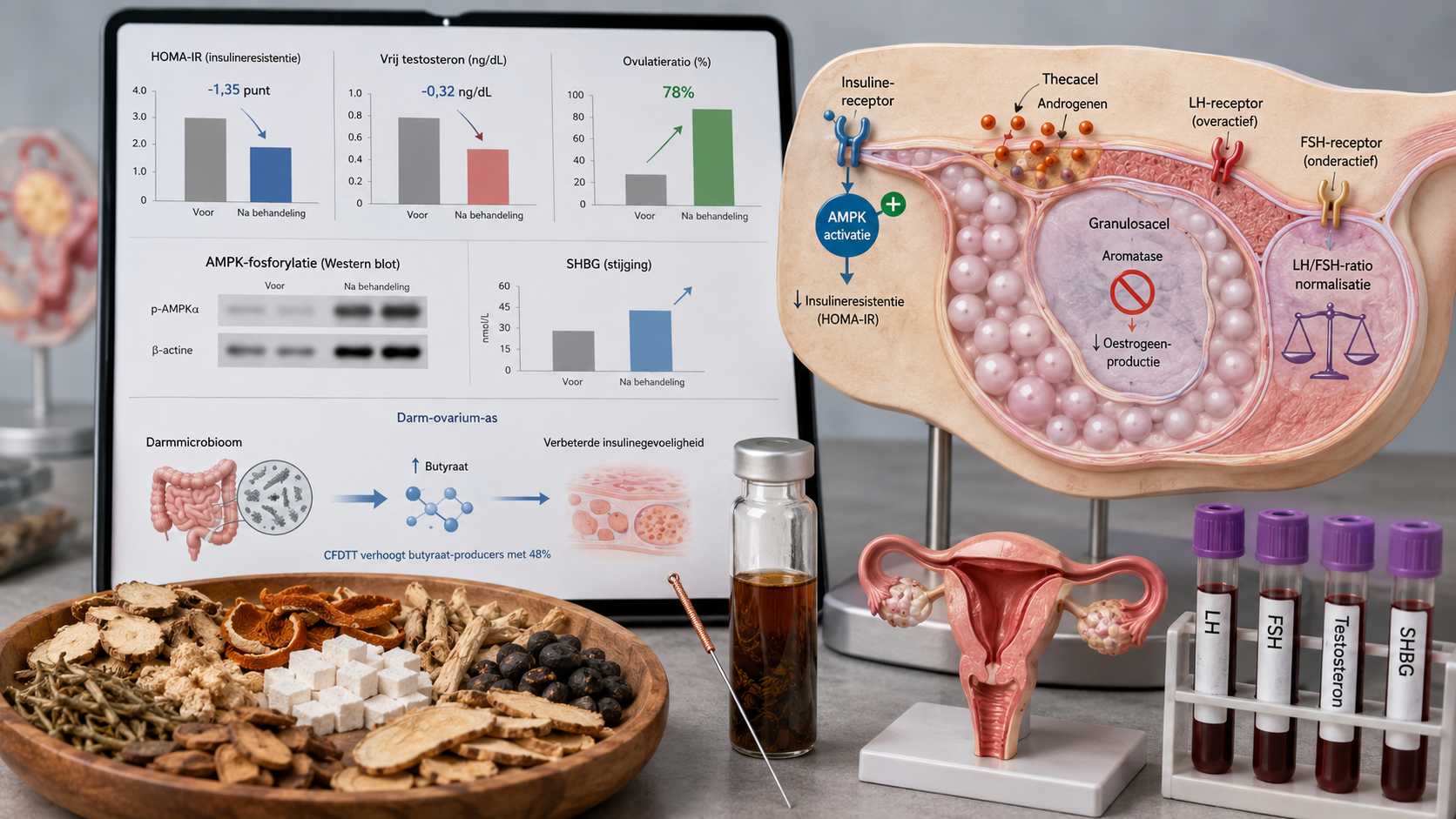
Polycystic ovary syndrome (PCOS) is the most common endocrine disorder in women of reproductive age, with a global prevalence of 8-13% (approximately 115 million women). It is characterized by hyperandrogenism, oligo- or anovulation, and polycystic ovarian morphology.
Conventional treatments have limitations: oral contraceptives suppress symptoms but do not address the cause; ovulation induction has a success rate of only 40-50%; metformin causes gastrointestinal side effects.
In China, TCM interventions – particularly Cang Fu Dao Tan Tang (苍附导痰汤), Er Zhi Wan (二至丸), Wen Jing Tang (温经汤), and acupuncture – have been used for centuries for kidney essence deficiency, phlegm-damp, liver-qi stagnation, and blood stasis.
Modern research reveals that TCM improves insulin resistance, reduces hyperandrogenism, normalizes the LH/FSH ratio, restores ovulation, and modulates the gut microbiota. This article integrates the latest insights and provides practical treatment protocols for TCM practitioners.