Acupuncture for Chronic Low Back Pain: From Empirical to Mechanism‑Based Medicine
Chronic low back pain (CLBP) is the leading global cause of years lived with disability. Beyond conventional treatments like NSAIDs and physical therapy, acupuncture is emerging as a well‑substantiated intervention. This review synthesizes clinical trials and mechanistic insights from 2024–2026.
Clinical Efficacy
A meta‑analysis of 8 RCTs with 1,123 patients showed that acupuncture significantly reduced pain at immediate follow‑up (SMD −0.73) and intermediate follow‑up (SMD −1.13). Electroacupuncture and blood‑letting were particularly effective.
Neuroimaging
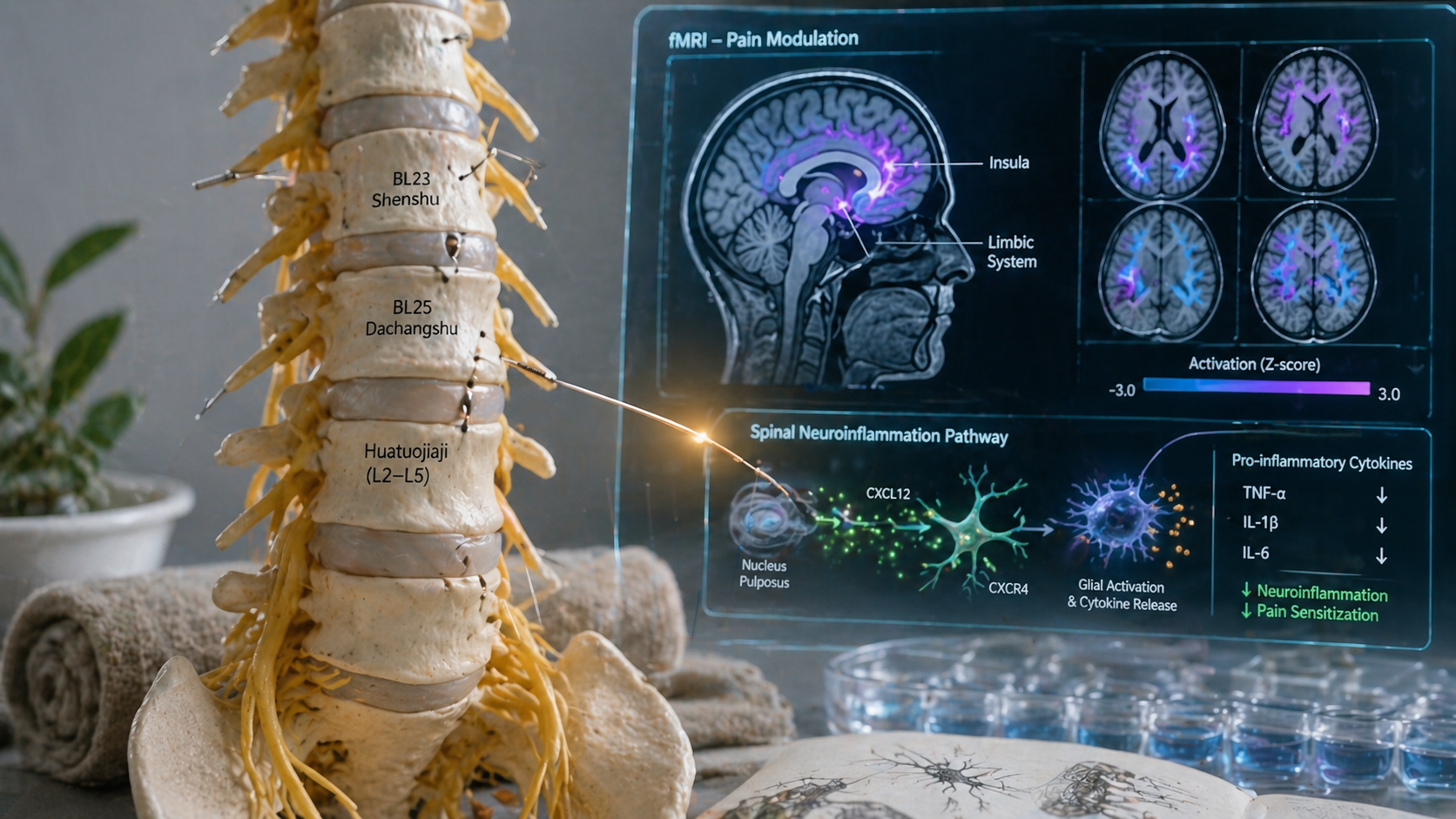
fMRI studies show that acupuncture modulates blood flow in the insula, limbic system, and posterior cingulate gyrus. An ongoing RCT from Shanxi is investigating whether acupuncture can prevent the transition from subacute to chronic pain.
Immunomodulation
In a rat model of lumbar disc herniation, acupuncture inhibited the CXCL12/CXCR4 axis and reduced TNF‑α, IL‑1β, and IL‑6. Electroacupuncture activated TNFAIP3, which suppressed the NF‑κB pathway. This explains the anti‑inflammatory effect in radicular pain.
Clinical Integration
The 2025 Chinese guideline for integrated management of chronic musculoskeletal pain places acupuncture within a three‑stage model (pain onset → pain relief → rehabilitation). This helps clinicians combine TCM and Western medicine.
Conclusion
Acupuncture is a rational, mechanism‑driven therapy for CLBP, with demonstrated effects on the central nervous system and immune system. It is especially valuable for patients who respond poorly to conventional analgesics or who have predominant radicular components.
References available upon request.